Two terms frequently cause confusion in India's digital compliance landscape: eSign and Digital Signature Certificate (DSC). Both are legally valid electronic signatures under the IT Act, 2000, but they operate very differently and are suited to different use cases. Understanding the distinction helps you choose the right tool for your compliance needs.
What is eSign?
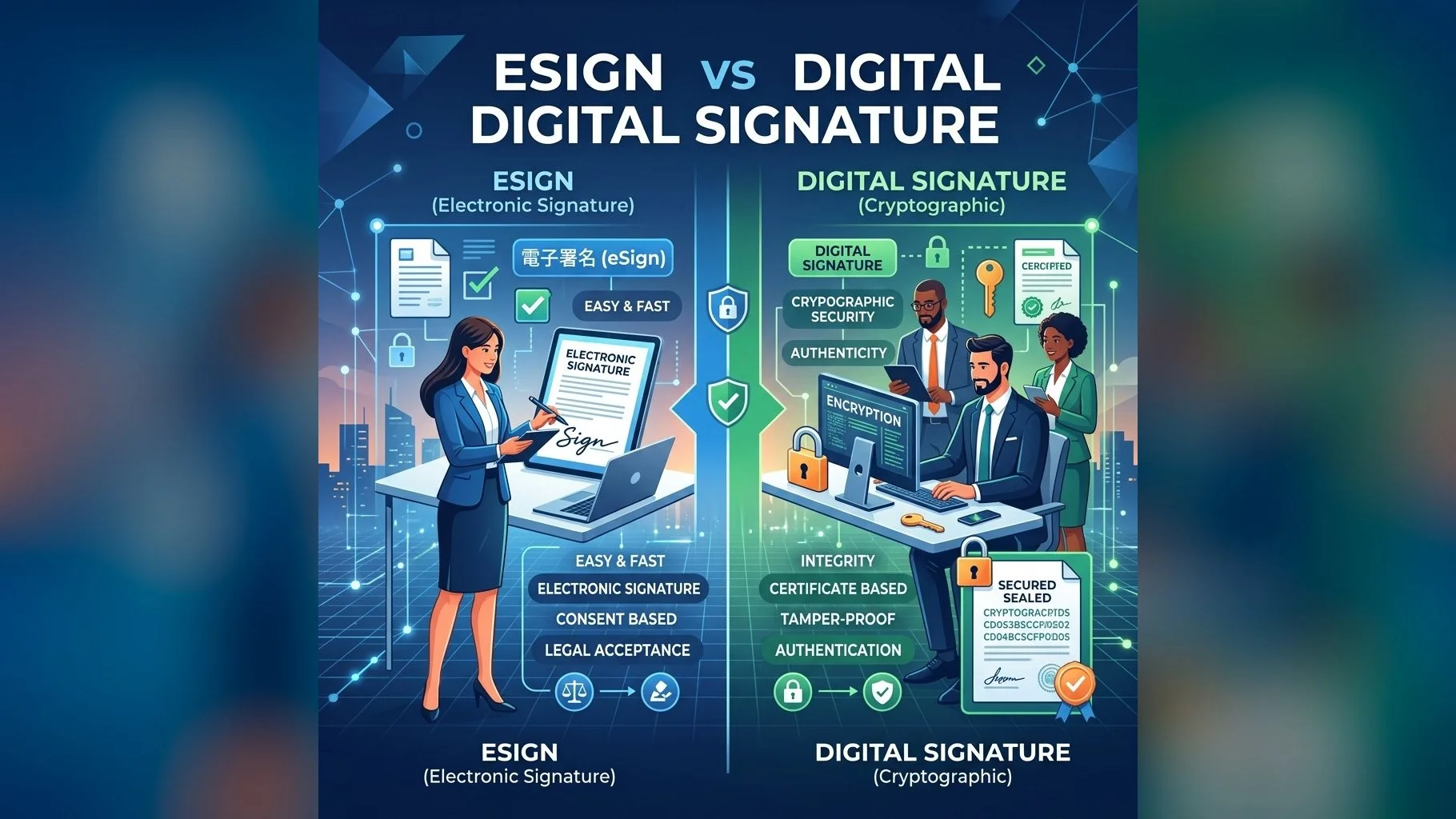
eSign is an online electronic signature service facilitated by Aadhaar-based authentication. It was introduced by the Government of India to enable individuals to sign documents without requiring a physical USB token. Here is how it works:
- The signer authenticates using their Aadhaar number and OTP (or biometric)
- The eSign service provider (an ESP licensed by UIDAI) generates a one-time digital signature on the document
- No USB token or pre-enrolled certificate is required — each signing event creates a fresh certificate
- Suitable for individuals signing low to medium-risk documents
- Cannot be used where Class 3 DSC is specifically mandated (e.g., company ITR, MCA filings, DGFT)
What is a Digital Signature Certificate (DSC)?
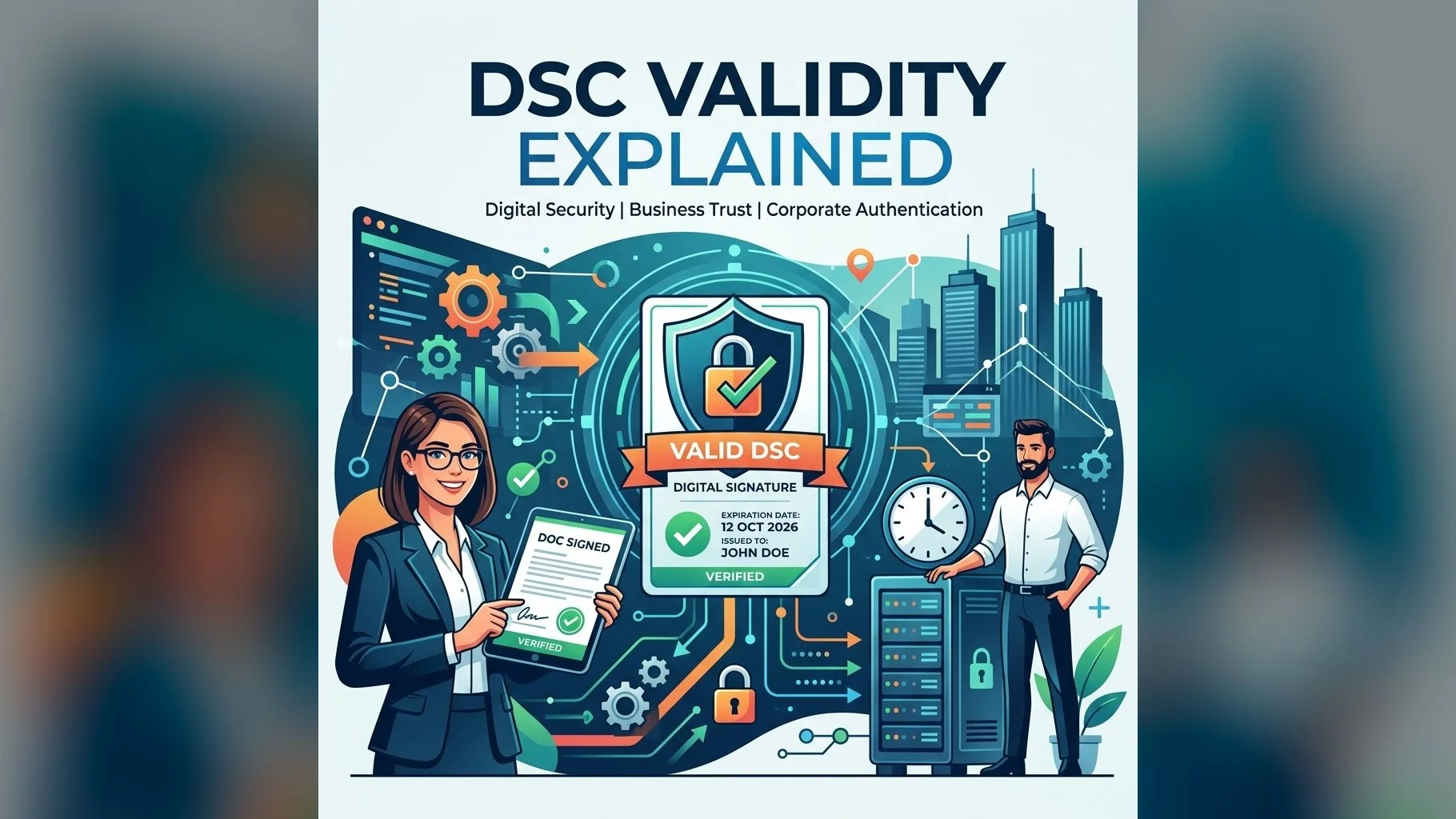
A DSC is a persistent digital identity certificate issued by a CCA-licensed Certifying Authority. It is stored on a FIPS 140-2 USB token and used for signing documents or authenticating on portals over its 1–3 year validity:
- Issued once after identity verification (Aadhaar-based video KYC or in-person)
- Private key stored on hardware (USB token) — not accessible to anyone
- Used for repeated signings across its validity period without re-authentication each time
- Required by law for: company ITR, MCA filings, DGFT, ICEGATE, GST (companies), e-tenders
- Higher security assurance — suitable for legal, financial, and regulatory documents
Key Differences: eSign vs DSC
- Hardware: eSign requires no hardware; DSC requires a FIPS USB token
- Validity: eSign certificate is single-use; DSC is valid for 1–3 years
- Cost: eSign is charged per use (typically Rs 20–100/sign); DSC is a one-time cost
- Mandated use: Government portals like MCA, DGFT, ICEGATE, and e-tender platforms require DSC — eSign is not accepted
- Volume: For high-volume signings, eSign can become expensive; DSC is more cost-effective
Get a Class 3 DSC for Regulatory Compliance
DSC is required by law for company filings, tenders, and trade portals. Get yours in 24 hours.
In summary: eSign is convenient for occasional, low-stakes document signing for individuals. DSC is mandatory for businesses and professionals with regulatory filing obligations. If you need to file company ITRs, MCA forms, DGFT applications, or submit e-tenders, a Class 3 DSC is the correct and legally required choice.